

Description
🌿 Dionaea muscipula ‘Sawtooth’
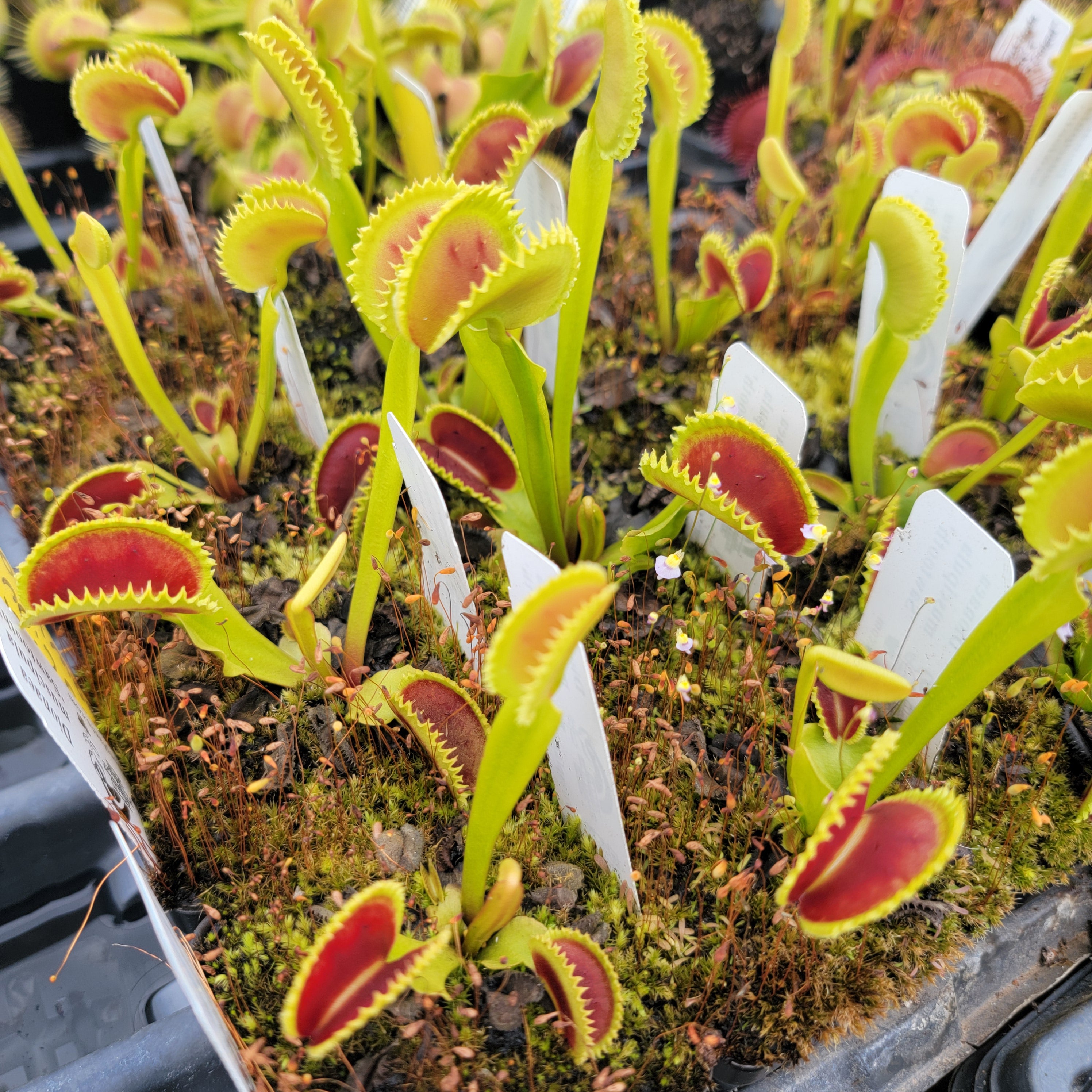
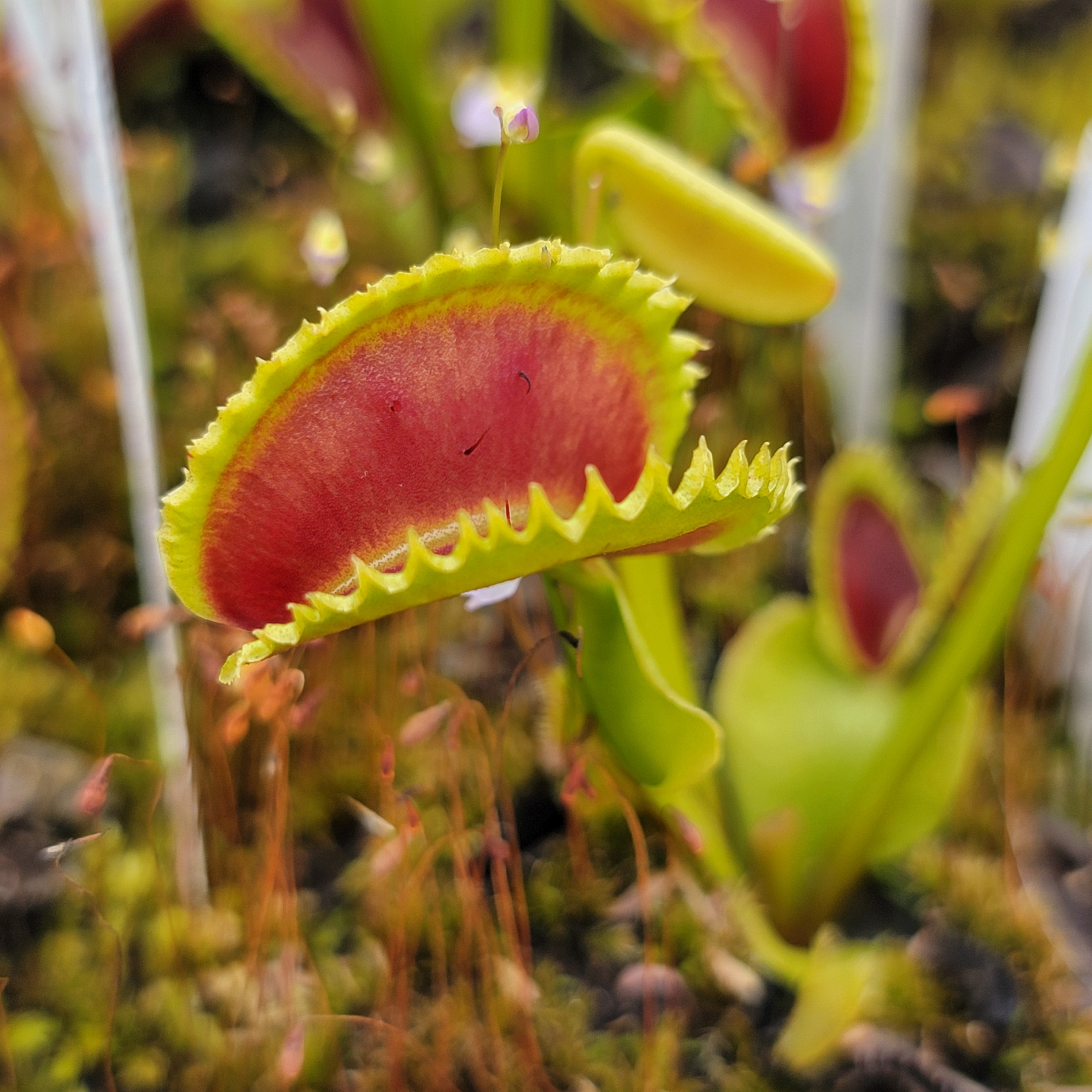
Dionaea muscipula ‘Sawtooth’ is a striking Venus flytrap cultivar known for its unique, jagged traps and bold coloration. This eye-catching plant stands out thanks to its distinctive serrated “saw-like” teeth, giving it a more aggressive and unusual look compared to typical flytraps.
When grown in full sun, the traps develop a beautiful contrast—bright green exteriors paired with deep red interiors, making each trap pop with vibrant color. The modified teeth are shorter and divided, creating the signature sawtooth appearance that collectors love .
Like all Venus flytraps, ‘Sawtooth’ uses its fast-moving traps to catch insects. Each trap closes when triggered by tiny sensory hairs, allowing the plant to capture and digest prey for nutrients .
✨ Why You’ll Love It
- Unique saw-like serrated teeth
- Beautiful green traps with red interiors in bright light
- A fun and unusual twist on the classic Venus flytrap
- Great for both beginners and collectors
🌱 Growth Notes
- Produces traps typically around 1–1.5 inches when mature
- Thrives in full sun for best color and trap development
- A hardy and rewarding carnivorous plant for any collection
This cultivar is a must-have for Venus flytrap lovers, especially if you’re looking for something a little different with bold character and personality 🌿
You'll receive a similar plant (NOT the exact same plant in the pictures)
Plants are shipped in a 2.5" pot, they are adult plants [about 2-3" across]. Comes with care instructions.
🌈🌿 Dionaea muscipula (Venus Flytrap) Care Guide
In areas where temperatures exceed 100°F, provide 30–40% shade cloth to prevent leaf burn.
Only use low-mineral water such as distilled, rainwater, or reverse osmosis water.
Dormancy period: 35–55°F (winter)
During this time, growth slows or stops. Reduce watering slightly and provide cooler temperatures.
• Using tap water (high in minerals)
• Providing insufficient light
• Overfeeding traps
• Allowing the soil to dry out
Light: Provide as much direct sunlight as possible for best growth and coloration.
Dormancy: Allow a natural winter rest period with cooler temperatures.
Patience: Traps naturally die off and regrow—this is part of the plant’s normal cycle.