



Description
Drosera andersoniana – A Jewel of the Australian Wilderness
Rare Australian Tuberous Sundew | Winter Growing | Collector's Species
Discover the fascinating beauty of Drosera andersoniana, an extraordinary tuberous sundew native to Western Australia. This captivating carnivorous plant combines delicate foliage, brilliant reddish-pink tentacles, and sparkling droplets of sticky mucilage, creating a dazzling display that looks almost like tiny jewels scattered across the soil.
Unlike many common sundews, Drosera andersoniana has a remarkable seasonal growth cycle and can transform dramatically as it matures, making it a particularly rewarding addition to a specialized carnivorous plant collection.
✨ A Beautiful and Unusual Growth Habit
One of the most fascinating characteristics of Drosera andersoniana is its ability to develop two distinct growth forms during its active season.
🌱 Basal Rosette Stage
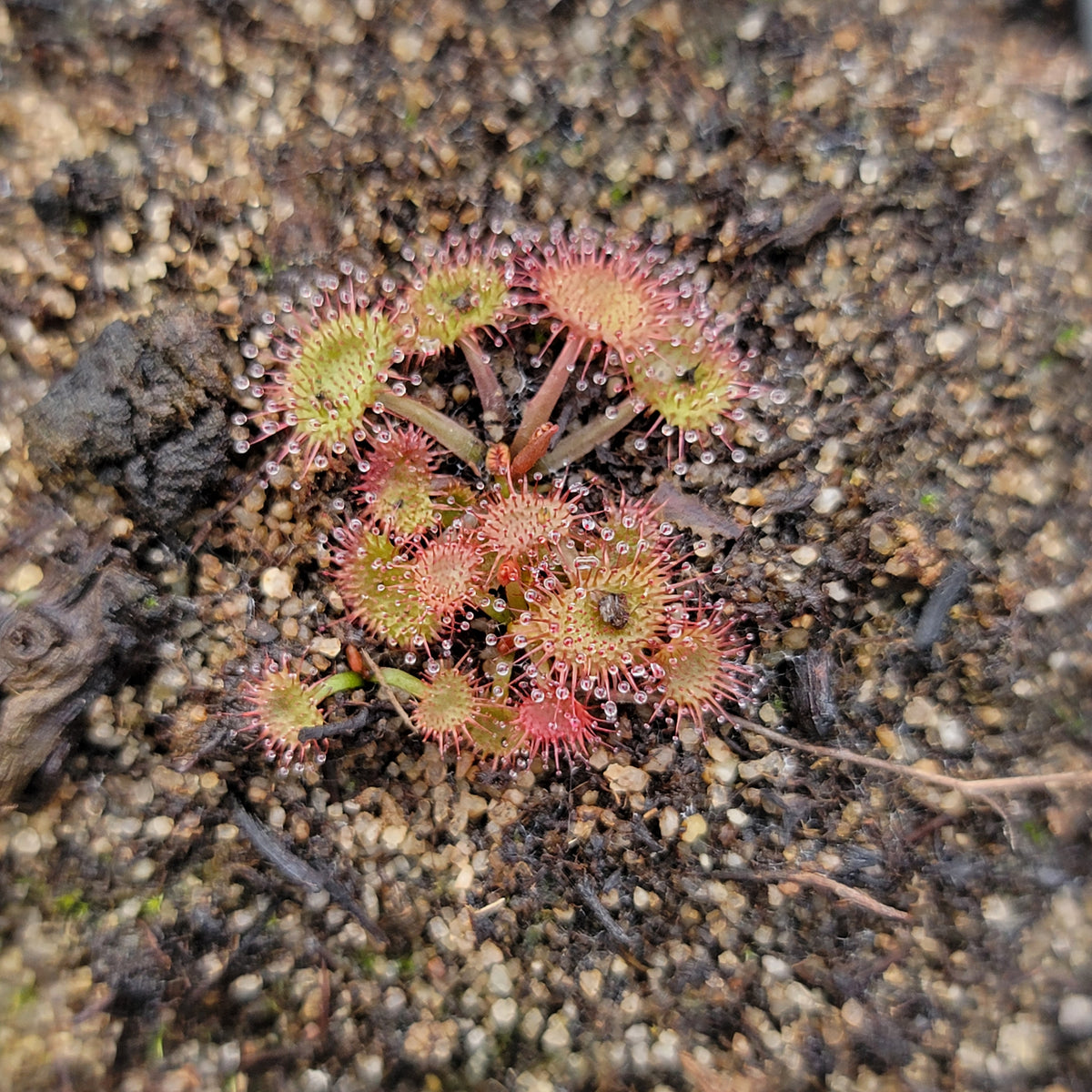
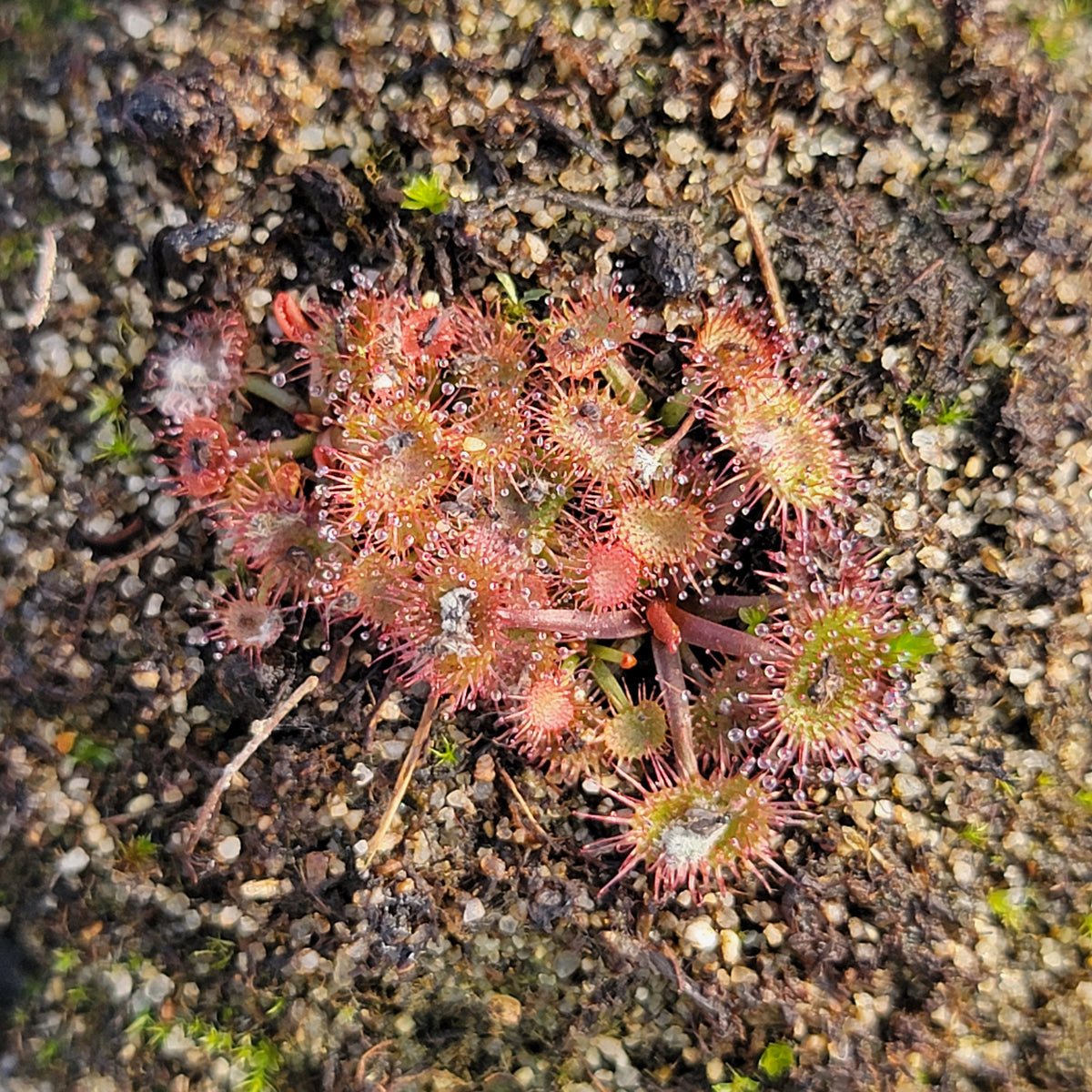
As the plant emerges from its underground tuber, it develops a beautiful basal rosette of small, rounded to oval carnivorous leaves. Each leaf is decorated with delicate reddish tentacles tipped with glistening droplets of mucilage.
Under favorable lighting, the leaves may develop beautiful pink, bronze, and reddish tones, making even young plants incredibly attractive.
🌿 Upright Growth Stage
As the growing season progresses, mature plants can produce an upright stem reaching from 3-10 inches tall.
Additional carnivorous leaves develop along the stem, giving the plant a distinctive architectural appearance quite different from the compact rosette seen earlier in the season.
This transformation is one of the reasons Drosera andersoniana is so fascinating to grow!
🪰 A Fascinating Carnivorous Hunter
Like other sundews, Drosera andersoniana captures small insects using specialized glandular tentacles.
The sparkling droplets covering its leaves are not ordinary water droplets. They are sticky mucilage produced by the plant to attract and trap unsuspecting prey.
Once an insect becomes trapped, the plant releases digestive enzymes that help break down its prey and absorb valuable nutrients.
This remarkable adaptation allows sundews to thrive in naturally nutrient-poor environments.
🌏 Native to Western Australia
Drosera andersoniana is native to the semi-arid interior of southwestern Western Australia, particularly the Wheatbelt region.
In its natural habitat, it is frequently associated with granite outcrops and sparsely wooded areas where seasonal moisture collects.
These environments experience cooler, wetter growing periods followed by warm, dry summers.
To survive these seasonal changes, the plant retreats underground into a specialized tuber, allowing it to remain dormant until favorable growing conditions return.
🌸 Delicate Flowers
Under favorable growing conditions, mature plants may produce beautiful white to pink flowers with intricately divided stigmas.
These delicate blooms provide an additional ornamental feature, complementing the plant's sparkling carnivorous foliage.
Flowering depends on plant maturity, seasonal conditions, and overall health.
❄️ Winter Growth and Summer Dormancy
IMPORTANT: This is a winter-growing tuberous sundew and requires seasonal care.
During fall and winter, as temperatures decrease and moisture becomes more available, the underground tuber begins producing new growth.
Throughout its active growing season, the plant develops carnivorous leaves and may eventually produce an upright stem and flowers.
As temperatures increase toward late spring and summer, the plant naturally begins preparing for dormancy.
Its foliage may gradually turn yellow, brown, or completely disappear above the soil.
This is a normal part of its life cycle and does not necessarily mean the plant has died.
During dormancy, the plant survives underground as a tuber. Watering must be significantly reduced to prevent the tuber from rotting, just .
With proper seasonal care, the plant can emerge again when cooler growing conditions return.
☀️ Summer Dormancy Care
During summer dormancy this Drosera retreats underground into its tuber, and the above-ground foliage naturally dies back.
Watering: Once the plant is fully dormant, lightly sprinkle a small amount of water over the soil every 1–2 weeks, depending on temperatures and how quickly the growing medium dries out.
The goal is to keep the medium barely moist without saturating it. Avoid standing water or keeping the soil consistently wet, as excessive moisture during dormancy can cause the tuber to rot.
As cooler temperatures return in fall and new growth begins to emerge, gradually increase watering to support the plant's active growing season.
🌈 A Special Addition to Your Collection
Whether you are an experienced Drosera grower or a collector fascinated by unusual Australian carnivorous plants, Drosera andersoniana offers something truly special.
From its delicate, dew-covered basal rosette to its impressive upright growth and seasonal transformation, this species beautifully demonstrates the diversity and adaptability of carnivorous plants.
Recommended for intermediate to advanced growers, especially those familiar with tuberous Drosera.
💚 A Note from Rainbow Carnivorous Plants
We take pride in sharing unique and fascinating carnivorous plants with our growing community.
Please remember that plants are living organisms and may vary in size, coloration, and appearance depending on their growing stage and environmental conditions.
The photographs show actively growing plants. Your plant's appearance may vary depending on its stage of growth and the time of year.
Happy growing, and thank you for supporting Rainbow Carnivorous Plants! 🌈☺️🙏
⚠️ PLEASE READ BEFORE PURCHASING
This Drosera is a winter-growing tuberous sundew that undergoes a natural summer dormancy.
Plants may vary in size and appearance depending on their stage of growth. Some plants may be just emerging from dormancy and appear smaller than the mature specimens shown in the photographs.
During summer dormancy, the plant naturally dies back above the soil and survives underground as a tuber. This is a normal part of its growth cycle.
Please familiarize yourself with the seasonal growing requirements of tuberous sundews before purchasing. These plants require different care from common tropical sundews.
We have a limited availability on this winter growing sundew.